

Metal cutting discs: selection guide

Why choose your metal cutting discs carefully?
A metal cutting disc is not a neutral tool. Used with a rotary tool, it makes the difference between a clean, fast, and safe cut, and a laborious operation that prematurely wears out your equipment. Whether you are a plumber, electrician, or experienced DIYer, the choice of the right disc determines the quality of your cutting work.
This article helps you navigate the essential criteria: diameter, thickness, reinforcement, compatible material type. You will learn to adapt your selection to your real needs, without marketing confusion.
What diameter and thickness to choose?
The disc diameter and its thickness are the two parameters that determine the maximum cutting depth. They are not interchangeable.
Common diameters
Cutting discs for rotary tools commonly come in three main dimensions:
- Ø 24 mm: compact format, ideal for precision work on small parts. Maximum cutting penetration: up to 10 mm. Suitable for thin bolts, screws, thin sheet metal.
- Ø 23.8 mm (almost equivalent to 24 mm): slightly thinner presentation, same cutting capacity up to 10 mm.
- Ø 32 mm: intermediate format for more robust work. Maximum cutting penetration: up to 14 mm. Allows cutting thick bolts, pipes, moderately thick sheet metal.
- Ø 77 mm: large format intended for dedicated machines (DSM20 type). Cutting depth up to 20 mm. Outside the scope of traditional rotary tools.
Disc thickness: a guarantee of rigidity
Thickness generally varies between 1 mm and 1.6 mm. A greater thickness (1.2 mm or 1.6 mm) offers more rigidity and reduces the risk of vibration or breakage during cutting. It is particularly suitable for working in hard or thick materials. 1 mm discs remain usable on light or thin parts, but require more delicate handling.
Practical rule: for difficult work (thick bolts, resistant sheet metal, dense non-ferrous metal), prefer a thickness of 1.2 mm or greater.
Disc reinforcement and resistance
A standard disc is effective on soft materials. But as soon as you tackle tougher metals or repetitive work, fiberglass reinforcement becomes a decisive asset.
How reinforcement works
Fiberglass is integrated into the structure of the abrasive disc (or blade). It holds the abrasive grains longer and prevents clean breaks in case of overload. Result: the reinforced disc lasts longer, vibrates less, and offers greater safety, especially if the disc were to fracture.
When to opt for reinforced?
- Regular or professional work on metal.
- Cutting bolts, heavy-duty screws, thick sheet metal.
- Non-ferrous metals (aluminum, brass, copper) that offer denser resistance.
- Powerful rotary tools (high rotation speed), where mechanical stresses increase.
For occasional use or light parts, a classic disc is enough. But if you regularly cut metal, investing in reinforced is profitable over time.
Metals and materials to cut
Before buying, check that the disc is suitable for the materials you work with. Metal cutting discs are versatile, but there are clearly established limits.
Ferrous and non-ferrous metals
- Metal sheets (mild steel, thin stainless steel): all standard discs do the job.
- Bolts and screws: cutting capacity up to 10 mm (small models) or 14 mm (wider formats).
- Metal pipes, aluminum tubes: well suited to reinforced discs, especially if the tube has a thick wall.
- Soft and non-ferrous metals (aluminum, brass, copper, bronze): fiberglass reinforced discs offer superior grip.

Beyond metal
Metal cutting discs also cut thin wood and some plastics (PVC, thin plastic). However, cutting wood exposes the disc more to kickbacks; if you frequently have thick wood, there are dedicated accessories that are more suitable.
To avoid: concrete, bricks, masonry. These highly abrasive materials wear out discs at extreme speed. Specific accessories (thick abrasive discs or masonry discs) exist for these applications.
Quantity and storage: adapt your purchase
Cutting discs wear out. The quantity you buy depends on your workload and your change rate.
- Large lots (36 discs): economical for intensive use or a professional. Profitable if you regularly consume them.
- Intermediate lots (10 to 20 discs): good compromise for a craftsman with moderate to medium cutting activity.
- Small lots (2 to 5 discs): test a new brand, or very occasional use. Also useful to stock your emergency case.
Discs are stored dry. Once opened, a lot degrades little if it does not undergo excessive moisture. Store them flat or in a box designed for this.
Mounting system and ease of change
Changing discs quickly saves time and improves your workflow. Two systems dominate the market.
Classic mounting (screw collet)
The disc is fixed via a nut that is tightened manually or with a wrench. Fast, universal, but requires a few seconds of adjustment at each change.
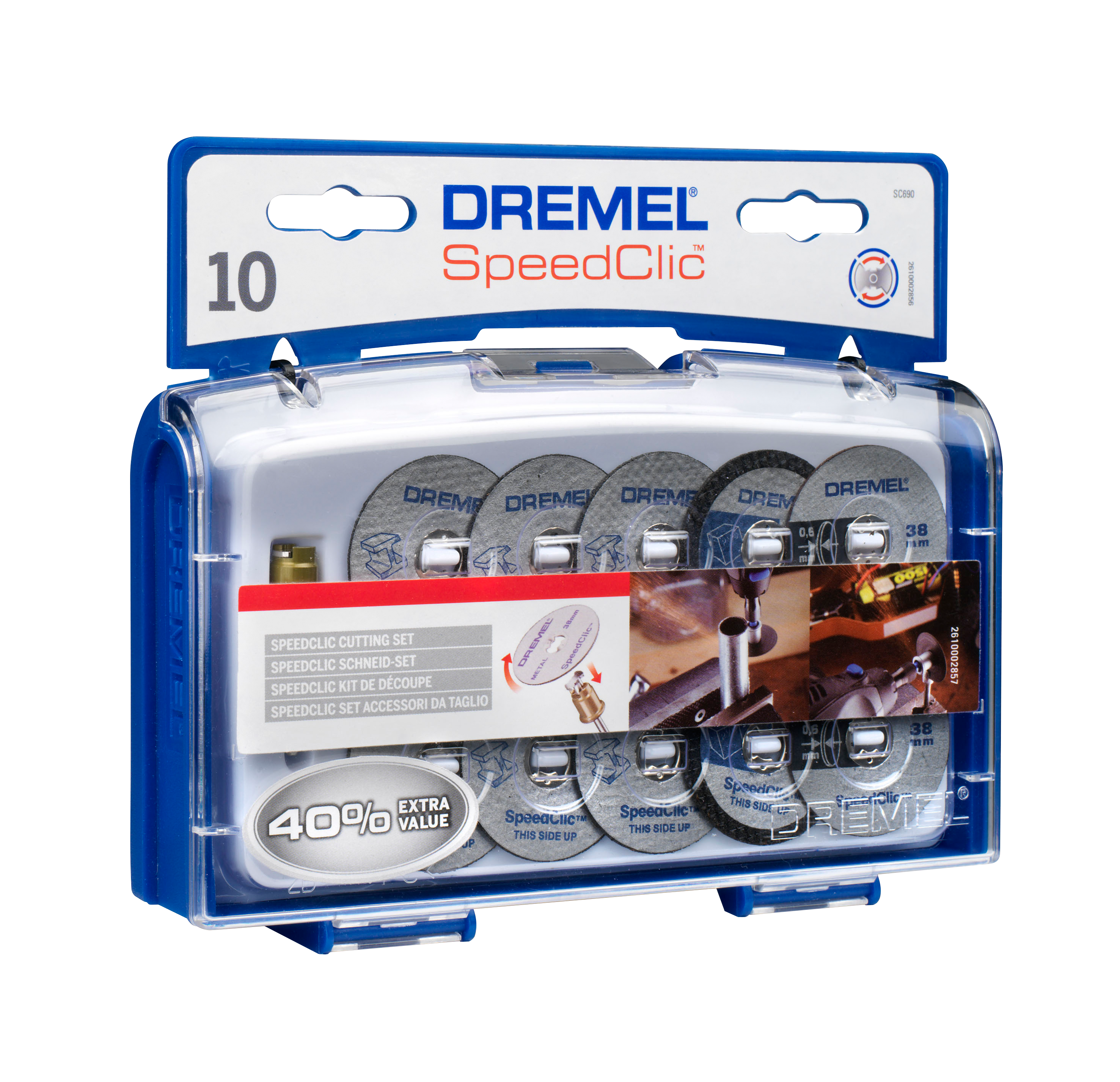
EZ SpeedClic system
This patented system allows you to change the disc in 3 simple movements, without removing the shaft from the machine. The EZ SpeedClic adapter screws in once, then the discs clip in and out in one motion. Ideal if you frequently alternate between several tasks or several diameters.
EZ SpeedClic discs are reinforced with fiberglass, adding robustness and safety. The initial surcharge is quickly compensated by the gain in productivity and comfort.
Usage guide: which disc for which work?
Plumbing and pipe work
- Fitting bolts, mounting screws: Ø 24 mm disc, 1 mm thickness, non-reinforced is enough.
- Metal pipes, thick tubes: Ø 32 mm disc, 1.2 mm thickness, reinforced for optimal grip.
Electricity and light fixtures
- Screws, small bolting, thin sheets: Ø 24 mm disc, 1 mm.
- High workload: opt for a lot of 20 or 36 discs and stock generously.
Soft metals and general craftsman work
- Aluminum, brass, copper, non-ferrous metals: Ø 32 mm disc, 1.2 mm, reinforced.
- Repetitive cuts or robust bolts: invest in EZ SpeedClic for speed.
Very occasional work or mobile emergency
- A few bolts here and there: a small lot of 5 Ø 24 mm discs in the case is enough.
- No need for technological surcharges.

Frequently Asked Questions
Can I use a metal cutting disc on thick wood?
Technically yes, but it is not optimal. Wood creates kickbacks and prematurely wears out the disc. For wood, prefer blades or specific accessories with a coarser grain. Reserve your metal discs for metal.
What is the maximum diameter for my rotary tool?
Most household rotary tools accept discs up to Ø 32 mm without problem. Very large machines (DSM20 type) take Ø 77 mm. Consult your tool manual for the official limit. A disc that is too large can touch the protective guard and create a danger.
How long does a cutting disc last?
It varies depending on the material, the rotation speed, and your technique. A disc can cut about ten thin bolts, or only 2 or 3 thick pipes. On soft metal (aluminum), it lasts longer. On hard steel, it wears out faster. Expect to replace regularly if you work intensively.
Do I need safety equipment to cut with a cutting disc?
Yes. Wear safety glasses obligatorily (metal fragments or disc that breaks). Light gloves are recommended for handling hot parts. In the workshop, if you work for a long time, consider a light dust mask. Always use the tool protector and hold the tool with two hands.
Conclusion and recommendations
Choosing the right metal cutting disc is first knowing the real needs: thickness of parts, materials worked, workload. Three key elements summarize the decision:
- The diameter (24 or 32 mm) sets the cutting depth. Start with the most compact if you only work on light bolting.
- The thickness and reinforcement ensure durability. Fiberglass reinforcement is worth the surcharge as soon as you tackle robust metal or a regular pace.
- The quantity depends on your consumption. Stock more if you are a professional or semi-professional.
To start or test, a standard lot of 20 Ø 24 mm discs offers the best value for money. As soon as you regularly work on thicker metal or switch between tasks, move to a reinforced Ø 32 mm format, or even opt for the EZ SpeedClic system which really speeds up the operation.
Explore our selection of Dremel cutting discs and find the lot that corresponds to your workshop. The difference will be felt in every cut.
Associated products



Leave a comment